
When Your Best People Stop Speaking Up
One of the most dangerous things that can happen in an organization is when your best people stop speaking up.
They see when a process isn't working. They recognize risks before they become bigger problems. They have ideas that could make the work easier, safer, or more efficient.
At first, they say something.
But nothing happens.
So they try again. Maybe they raise the issue with another leader or suggest a solution. When nothing changes, they eventually learn an important lesson:
It's not worth speaking up.
And that's when leaders should be concerned.
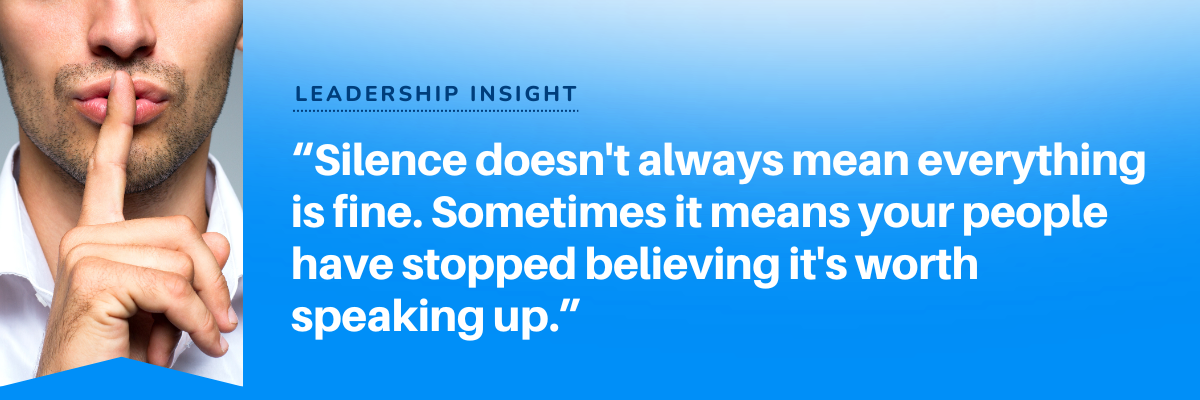
Silence Doesn't Mean Everything Is Fine
It's easy to interpret a lack of complaints as a positive sign. But sometimes people aren't quiet because the problems have gone away. They're quiet because they've stopped believing anything will happen if they raise them.
That's particularly concerning when the people who stop talking are experienced employees and frontline leaders.
They're often the people closest to the work. They see where processes break down, where time is being wasted, where employees are struggling, and where today's small problem could become tomorrow's operational disruption.
When they stop sharing what they know, leaders lose access to valuable information they need to run the business effectively.
Your System Teaches People How to Behave
We often talk about wanting employees to take ownership and show initiative. But organizations also need to pay attention to what happens when employees actually do those things.
What happens when someone identifies a problem? When a frontline leader escalates an issue? When an employee suggests a better way of doing something?
If the answer is consistently nothing, people adapt.
They stop escalating concerns, suggesting improvements, and challenging things that aren't working. Eventually, they may simply do what they're told and go home.
From the outside, they might still look like solid performers. They're showing up and getting the work done.
But something important has changed.
The organization is no longer benefiting from their ideas, experience, discretionary effort, or willingness to make things better.
Pay Attention to What You Aren't Hearing
If leaders want employees to speak up, asking for feedback isn't enough. They have to demonstrate that speaking up leads somewhere.
That doesn't mean every suggestion gets implemented or every concern gets resolved exactly as the employee wants. It does mean people need to know they were heard and understand what happens next.
Leaders can build that trust by:
Acknowledging concerns instead of allowing them to disappear
Explaining what will happen next and who owns the follow up
Closing the loop, even when the answer is no
Recognizing employees who identify risks and improvement opportunities
Looking for patterns when the same issues keep resurfacing
The goal isn't to eliminate every problem.
It's to create an environment where people continue to believe it's worth raising them.
Leadership in Practice
Think about the people closest to the work in your organization.
What have they stopped telling you?
This week, instead of asking, “Are there any issues?” try asking:
“What's something around here that people have given up trying to fix?”
Then listen carefully to the answer.
You may learn more from that question than you expect.
Are workforce problems becoming accepted as simply “the way things are”? I help operations leaders step back, identify what's really driving workforce and performance challenges, and build practical solutions that create greater stability and stronger execution. If you'd like to talk about what you're seeing in your organization, let's connect.